
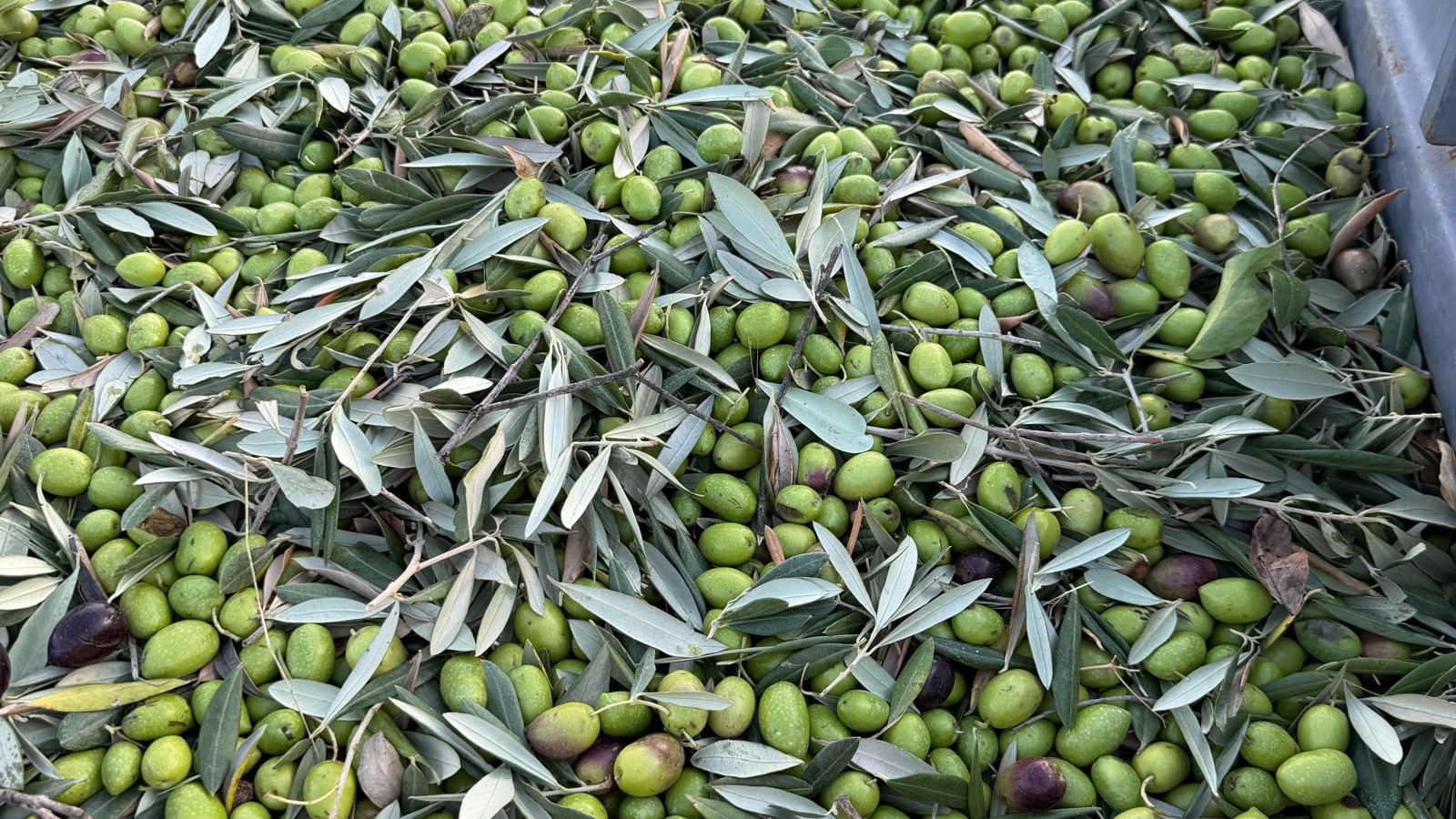
By Romain Lavrilloux — founder, Olive Private Label Studio, Córdoba (Andalusia). Photos and video taken in an Andalusian mill on 23 October 2026, in the first weeks of the 2026/27 harvest. Last updated: 27 October 2026.
Extra virgin olive oil is made in six mechanical steps: the olives are cleaned, crushed into a paste, slowly mixed (malaxed), spun in a horizontal centrifuge called a decanter to separate the oil from the water and solids, cleaned in a second, vertical centrifuge, then filtered or left to settle before storage and bottling. No heat treatment, solvents or refining are allowed at any point: that is what makes it “virgin”. In a modern mill, the olives become oil in a matter of hours. This guide walks through each step with photos from a working mill, and explains the decision behind each one if you are building an olive oil brand.
Before the mill: when the olives are picked
The first decision is taken in the grove. Olives picked early, while still green, give less oil per kilo, but that oil is more bitter, more peppery and richer in polyphenols. Riper, purple olives give more oil with a rounder, softer profile. In Andalusia the harvest starts in late October and runs into January, so the same grove can produce very different oils depending on the week it is picked. Variety plays a large part too: see our Picual, Hojiblanca and Arbequina comparison.
From the moment an olive leaves the tree, the clock is running. Bruised fruit and olives left waiting in a trailer start to ferment, and those defects end up in the oil. Good mills crush their olives as fast as they can, ideally the same day they are harvested.
Step 1 — Reception and cleaning
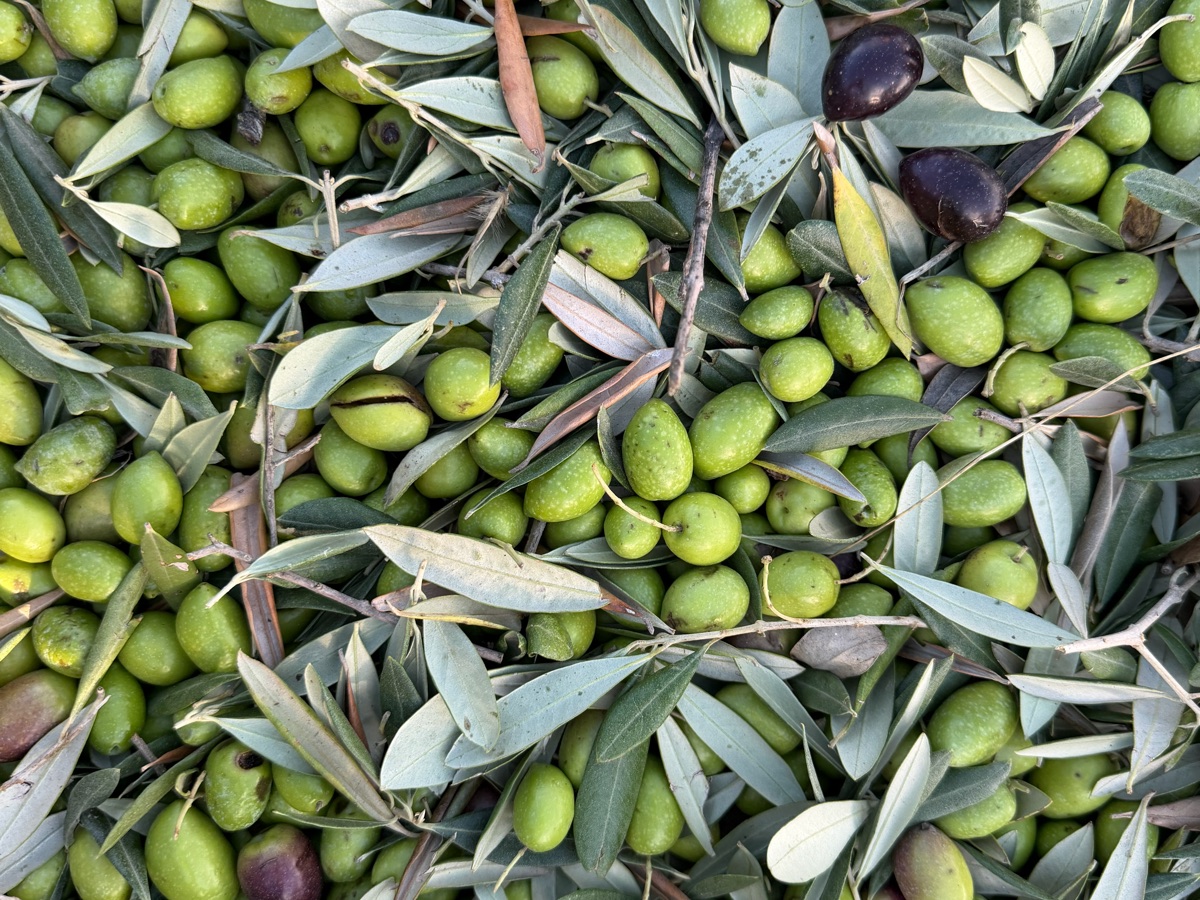
Each load is weighed when it arrives. A blower then strips out the leaves and twigs, and the olives are washed if they carry soil or dust. Olives picked from the tree and olives gathered from the ground are kept apart: fruit that has fallen and lain on the ground rarely makes extra virgin oil, so serious mills process the two separately.
Step 2 — Crushing and malaxing
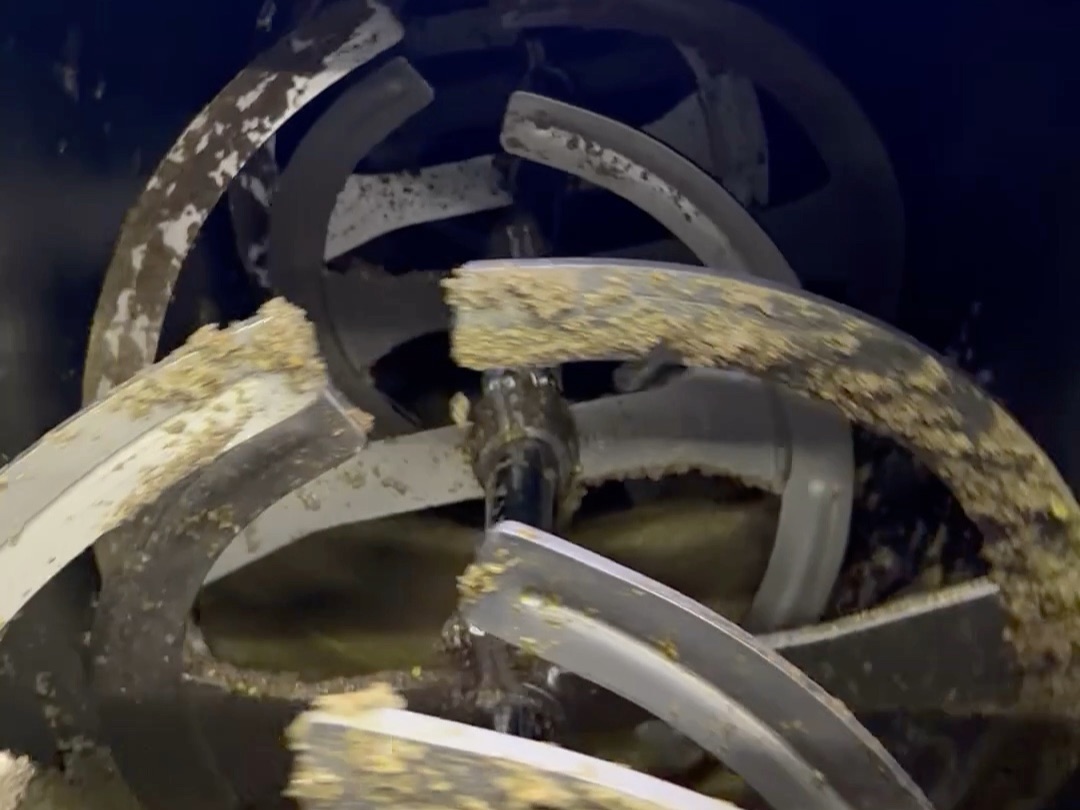
A hammer mill crushes the whole olive, stone included, into a paste. The paste then goes into malaxers: stainless-steel troughs where blades stir it slowly, usually for somewhere between half an hour and an hour. Malaxing lets the tiny droplets of oil released from the fruit cells join into larger drops that can be separated.
This is where yield and quality pull in opposite directions. A warmer, longer malaxation extracts more oil, but costs aroma and polyphenols. Under EU marketing rules (Delegated Regulation 2022/2104), the terms “cold extraction” and “first cold pressing” may only appear on a label if the oil was obtained below 27 °C.
Step 3 — The decanter: separating the oil
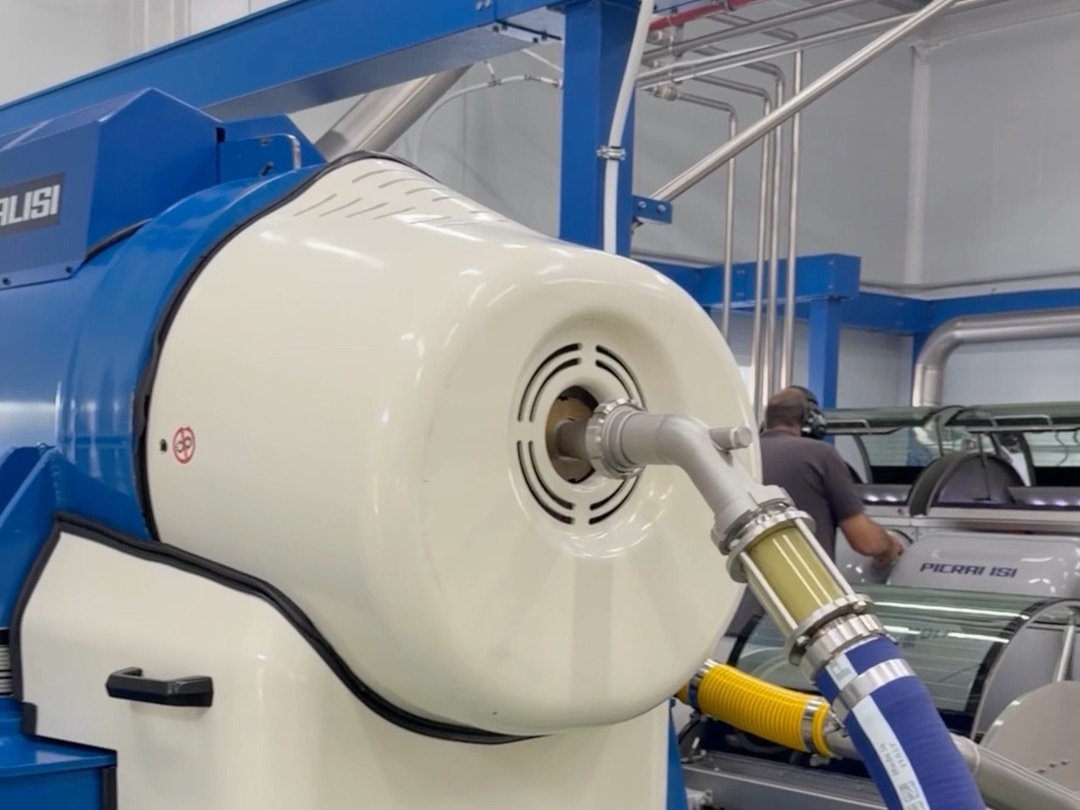
Modern mills no longer press olives. The paste is pumped into a horizontal centrifuge, the decanter, which spins it fast enough to separate the oil from the water and solids of the fruit. Most Spanish mills work in two phases: oil comes out on one side and a wet pomace, called alperujo, on the other. That pomace is sent to specialist extractors, where it becomes olive-pomace oil, a different product that can never be sold as virgin olive oil.
Step 4 — The vertical centrifuge: the oil comes out
The oil leaving the decanter still holds traces of water and fine particles. A second centrifuge, vertical and much faster, removes most of them. What comes out is the moment everyone in a mill comes to watch: a stream of cloudy, bright green oil with an intense, fresh fruitiness.
That cloudiness is normal. It comes from microscopic fragments of fruit and droplets of water still in suspension. They give a new oil its vivid look, but they will not stay stable for long, which is what the next step is about.
Step 5 — Settling or filtering
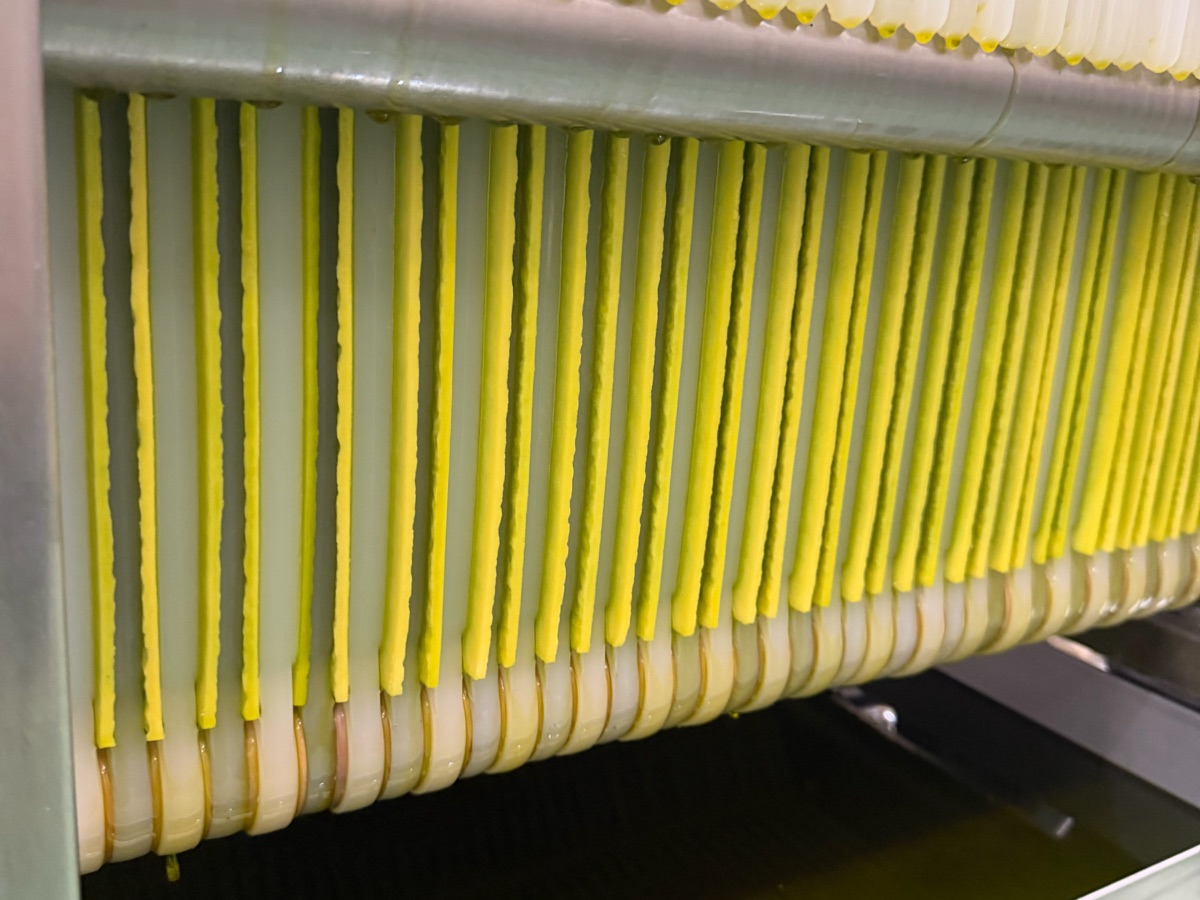
The oil is either left to settle in tanks, so the sediment drops to the bottom, or passed through filters such as the plates above. Unfiltered oil looks beautiful and tastes intense, but its particles and traces of water can ferment over time, so it is best drunk within a few months. Filtered oil is clear, more stable, and keeps its quality longer on a shelf. Neither is wrong; they suit different products.
Step 6 — Storage, analysis and bottling
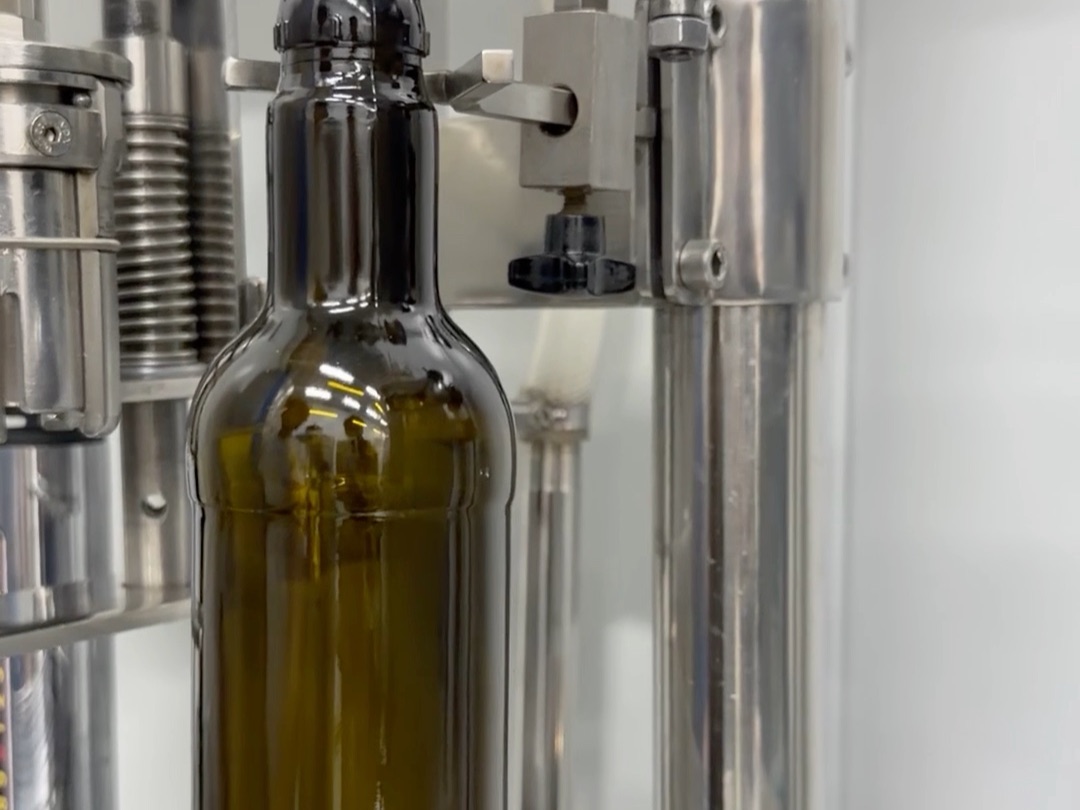
The oil is stored in stainless-steel tanks, protected from light, heat and air, until it is bottled. Its legal category (extra virgin, virgin or lampante) is not a matter of opinion: it depends on laboratory analysis, including free acidity, peroxide value and UV absorbance, and on a certified tasting panel. Extra virgin oil must have a free acidity of no more than 0.8% and no sensory defects.
Dark glass, tin or bag-in-box then protect the oil from light until it is opened. From here on, its enemies are the same as in the mill: heat, light, oxygen and time.
What it means if you are building an olive oil brand
You do not need to run a mill to sell excellent olive oil under your own name. But every step above is a decision that changes what ends up in your bottle, and most of those decisions are made long before the oil reaches you:
- When to harvest: early, intense and scarce, or later, rounder and more abundant.
- How fast to mill: the hours between tree and mill show up in the taste.
- How warm and how long to malax: yield against aroma and polyphenols.
- Filtered or not: a seasonal edition, or a core range built to last on the shelf.
- Which lot goes into your bottle: tasted, analysed and approved against your specification before bottling.
That is why a region or a variety is never what you sign off. You sign off a lot. If you want to see how we handle this with our clients, read how our process works.
Frequently asked questions
How is extra virgin olive oil made?
By mechanical means only: the olives are cleaned, crushed into a paste, slowly malaxed, then spun in a horizontal centrifuge (decanter) and a vertical centrifuge to separate the oil from water and solids. The oil is then settled or filtered, stored and bottled. No heat treatment, solvents or refining are allowed.
Is olive oil still pressed?
Very rarely. Almost all modern mills use centrifuges instead of presses. “Cold pressed” and “cold extraction” are regulated label terms in the EU: they may only be used if the oil was obtained below 27 °C.
How many kilos of olives does it take to make a litre of olive oil?
Roughly 4 to 7 kilos, depending on the variety, the ripeness of the fruit and its water content. Early-harvest green olives sit at the high end of that range: less oil per kilo, but often more intense and richer in polyphenols.
Why is new olive oil cloudy and green?
Freshly extracted oil still carries microscopic fragments of fruit and droplets of water. They make it cloudy and vivid, and they settle or are filtered out over the following weeks. Unfiltered oil should be enjoyed within a few months.
What is the difference between extra virgin and virgin olive oil?
Both are made by the same mechanical process. The difference is quality: extra virgin must have a free acidity of no more than 0.8% and no sensory defect detected by a certified tasting panel. Virgin olive oil may have up to 2% acidity and slight defects.
What happens to the olive pomace?
The wet pomace left after the decanter goes to specialist extractors. They recover a residual oil, olive-pomace oil, which must be refined and can never be sold as virgin or extra virgin. The rest is used as biomass fuel or compost.
Sources
- European Commission, Delegated Regulation (EU) 2022/2104 on marketing standards for olive oil
- International Olive Council, Trade Standard applying to olive oils and olive-pomace oils
- Field visit to an Andalusian olive oil mill, 23 October 2026
Building an olive oil brand and want to know what your oil should look like at each of these steps? Tell us about your project — market, product, timing — and we’ll come back with matched producer options. No commitment.